

Ski
08.10.2026
Starting to ski in Valloire: how to prepare for your first runs?
Want to start skiing in Valloire? Good preparation will help you discover the sport with confidence. Choose the right equipment, l...
Read more
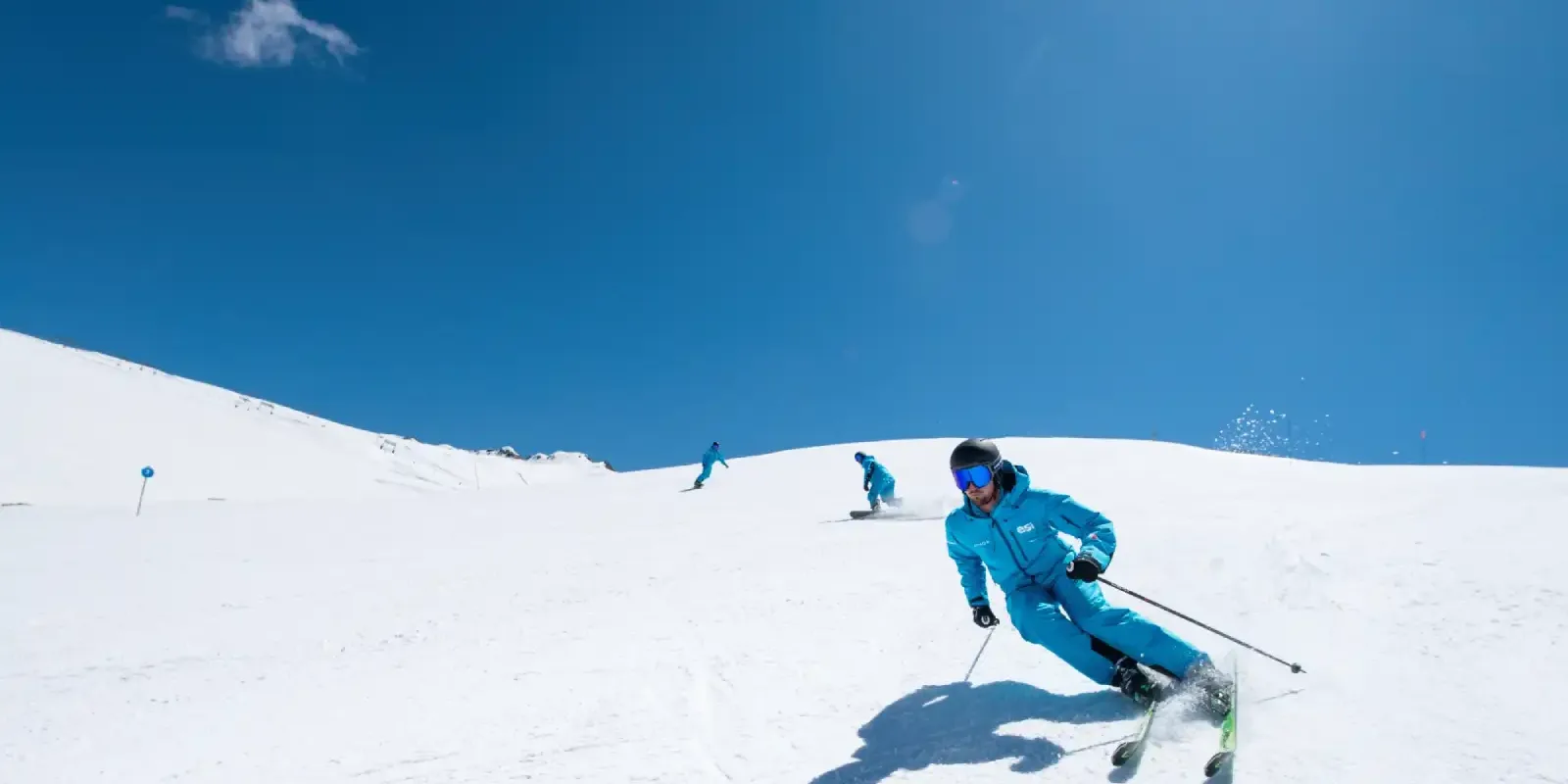
Have you mastered the snowplough and want to ski with parallel skis? This step requires practice, balance, and progressive movements.
At Valloire, an ESi instructor can help you make this transition based on your skill level. You will learn to turn more fluidly, without focusing on speed.
Before bringing your skis closer together, ensure you have mastered the snowplough. You need to be able to slow down, turn in both directions, and control your trajectory.
Choose an easy, open slope. A gentle incline gives you time to get a feel for your weight distribution. Avoid crowded or overly steep slopes during your initial attempts.
An instructor can assess your level and suggest suitable exercises. ESi Valloire supports skiers from their first steps to advanced skill development.
In the snowplough, your skis form a V-shape. In a parallel turn, they remain side-by-side and follow the same direction.
The transition happens gradually. You can start by bringing the inside ski closer after initiating the turn. Then, bring that ski alongside the other one while traversing the slope.
Keep your knees flexible and your upper body stable. Look in the direction you want to go. Guide the turn with your legs and keep your arms relaxed.
Gradually apply pressure to the outside ski during the turn; it supports much of your balance. However, keep both skis in contact with the snow.
Start by linking a few snowplough turns on a gentle slope. Aim for a consistent path and finish each turn by traversing across the slope.
While traversing the slope, gently bring your inner ski closer to the outer ski. Do not force the movement. Repeat this several times on each side.
Once you feel stable, gradually narrow your snowplow stance. Allow your skis to come together earlier in the turn. Maintain a speed that you can easily control.
An instructor may then suggest exercises for sideslipping or steering through turns. They will adjust the difficulty level based on your balance and braking control.
Do not snap your skis together abruptly. You risk losing your balance if you force them together before controlling your trajectory.
Also, avoid leaning backward or turning only your shoulders. Maintain a relaxed posture and steer your legs into the turn.
Do not try to speed up just to progress faster. A moderate speed makes it easier to make corrections and helps you stay relaxed. Take a break as soon as fatigue affects your concentration.
A lesson can save you time and allow for the correction of movements as soon as issues arise. The instructor selects the terrain, observes your weight distribution, and adjusts their advice after each attempt.
In a group lesson, you progress alongside skiers of a similar level. A private lesson allows you to focus on a specific goal, such as transitioning to parallel skiing.
In Valloire, check with ESi to choose the option that best suits your experience level. Be sure to specify your level accurately when booking.
Moving from the snowplough to parallel turns doesn’t happen in a single run. Repeat the exercises on a suitable slope and consolidate each new sensation.
Once you can control your speed and bring your skis together with ease, you can explore a wider variety of slopes. Always ask your instructor for advice before moving to different terrain.
With steady progress and tailored guidance, you will improve your balance and fluidity. Each successful turn will bring you closer to a more natural parallel skiing style.
Ski
08.10.2026
Others
08.10.2026